There’s no sugar-coating it: it’s a bleak landscape for funding government programs that address our climate catastrophe. And we’re not just talking about the federal government, where the Trump administration has been dismantling clean energy and resilience programs and raising costs for people all over the country.
No, cuts to climate funding are happening at the state and local levels as well, even in progressive places like Washington and Oregon. And even with policies and programs passed to create revenue specifically for climate and clean energy programs, we are now seeing those dollars snatched away for other things.
The Climate Commitment Act (CCA), Washington’s landmark cap-and-invest policy that has funded hundreds of clean energy and water programs across the state since 2023, saw legislators take over half a billion dollars to fill budget holes unrelated to climate in 2026. This was even though Washingtonians voted decisively in 2024 to preserve the CCA because of its crucial community benefits. Up until now, CCA funds have helped Washington residents across the state breathe cleaner air from electric school buses and trucks; protected natural lands through forest restoration, wildfire resilience, and salmon recovery; and kept our homes cool, resilient, and affordable through heat pump and weatherization programs.
We have to be equally vigilant about how our local governments in the Pacific Northwest use their budgets as well.
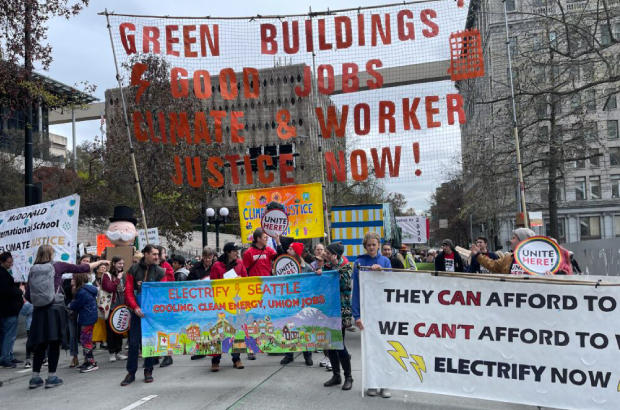
Seattle is a crucial example. Seattle’s Office of Sustainability and Environment has worked to move low-income Seattleites off dirty oil heating and pass landmark policies like the Seattle Building Emissions Performance Standard. They also make direct grants to community organizations through the Environmental Justice Fund, supporting projects like green infrastructure in the Duwamish Valley, Black-led environmental education, and culturally specific educational programs to address the health impacts of poor indoor air quality for migrant households.
In 2020, Seattle City Council passed a landmark progressive revenue policy called a payroll expense tax (PET), also known as Jumpstart, which charges large businesses that have a lot of employees. Councilmembers also passed a spending plan with the majority going to affordable housing, but an important 9% going to climate investments outlined by Seattle’s Green New Deal.
In five years PET has generated hundreds of millions of dollars, but Seattle hasn't followed its original plan of sending 9% of that to climate work and programs (upwards of $182 million in total). Instead, up to half the PET funds have been used every budget cycle to backfill other departments. And the investments in Green New Deal priorities have actually decreased over the years—not just their percentage of the total PET funds, but in actual dollar amount—a trend which is being continued in new Mayor Katie Wilson’s proposed budget for 2027-2028.
Seattle is not the only place where climate dollars are being tapped to fund other priorities unrelated to addressing climate or clean energy. The Portland Clean Energy Community Benefits Fund (PCEF), which gets its revenue from a 1% tax on large retail corporations like Walmart and Target, has distributed more than 20,000 free air conditioners, funded 3,100 energy retrofits, and trained more than 2,000 people in renewable energy and construction jobs since 2019. This year, the Portland Police Association tried to introduce a ballot measure that would have permanently diverted 25% of the fund to hire new police officers. Fortunately, they did not gather enough valid signatures for the 2026 election, but they could certainly try again in the future.
And PCEF is still under threat right now: Portland City Council could take $120 million from PCEF to help renovate Moda Center, home to the Portland Fire and Portland Trail Blazers. I’m a big women’s basketball fan, but PCEF funds should be used to prevent climate pollution and improve air quality and resilience for Portland’s most vulnerable communities, not to remodel professional basketball stadiums.
As we head into budgeting season for local governments in Washington and Oregon, we will be watching out for other attempts to cut climate funds and for ways you can engage to fight back. Local and state climate programs are already doing the work to protect us from the effects of climate change in Washington, from sea level rise and ice pack melting to wildfires and extreme heat. We need to restore the sources of climate funding that were always meant for climate programs so that we don’t lose those resources and become more vulnerable to climate harms.