In a truly reckless move today, the Trump administration has acted to eliminate the federal government’s ability to fight climate change altogether.
By repealing the scientific finding that greenhouse gases are harming people’s health (referred to as the “endangerment finding”), the EPA has officially stripped its own legal authority under the Clean Air Act to regulate climate pollution—at all. If this decision is allowed to stand, the consequences will be profound and long-lasting, solely benefiting Big Oil and industrial polluters’ short term profits while harming communities across the country well into the future.
“Already, people living near highways and transportation corridors are breathing heavier,” observes Dr. Vin Gupta, a pulmonologist and medical analyst at NBC News. “Tailpipe pollution is dangerous, climate impacts hurt people, and this action by the Trump administration is a prescription for more harm to our health.”
With no meaningful federal backstop remaining to protect us from the threats of fossil fuel pollution, responsibility now rests squarely with states like ours to lead. We are not powerless and we will fight back, but we have to truly step up in this moment to stem the damage.
Now, more than ever, we must come together to keep charting our own clean energy future. It is on us and our elected officials in Oregon, Washington, and other states committed to clean air and climate progress to protect, build on, and invest in the solutions we have and need more of.
Why this move is so reckless and damaging
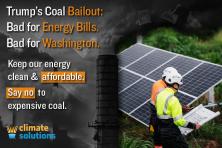
By falsely claiming climate pollution is not harming people, the EPA is cancelling its own authority to protect communities from the pollution caused by power plants, vehicles, and oil and gas drilling. That means the federal government will have no legal ability to regulate vehicle emissions, oil and gas drilling, or dirty power plants (such as the decades-old coal plant in Centralia that the Trump administration is now unlawfully attempting to keep open).
This reversal and the rollback of pollution standards will have dire consequences for people in the Northwest, as across the country. Over the next 30 years, these changes are projected to cause as much as $11.28 billion in health harms and $72.63 billion in additional fuel costs for Washington residents; Oregonians will endure up to $2.21 billion in health harms and $36.10 billion in additional fuel costs over the same period, according to the Environmental Defense Fund.
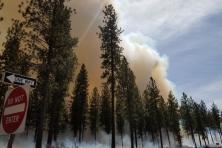
Here in the Pacific Northwest, it is hard to believe the federal government is making climate denial an official national policy and further undermining our ability to stave off its harms. Imagine telling that to Oregonians who have lost their homes to wildfires, Washingtonians still digging out from December’s devastating floods, or our communities now adding “snow drought” to their lexicon and wondering what it portends for this summer’s drought and wildfire outlook.
The Trump administration’s desire to deliver on Big Oil’s wishlist coupled with its lack of regard for law or science is playing out in countless damaging ways. But here in the Northwest, where our fates are tied to the health and well-being of our people, communities, and natural environment, we have never waited for federal leadership on climate progress. And we’re not going to start letting them pull us backward now.
How we can still defend and deliver for the Northwest
In Oregon and Washington, we recognize the threat posed by climate pollution and the opportunity presented by moving from fossil fuel dependence to affordable clean energy independence.
We are going to keep defending our gains and focus our energy on delivering the benefits promised by our cornerstone climate policies.
Getting more solar, wind, storage and transmission built to power the clean energy transition. Scaling up adoption of EVs, electric trucks and school buses along with strong charging networks. Ensuring our region has cleaner fuels and more alternative transportation choices for everyone. Supporting affordable heat pumps, electric appliances, and deeper energy efficiency gains for everyone’s homes, apartments, and buildings. And making sure this all happens justly to benefit all those communities already on the frontlines of climate harms so no one is left behind in this transition.
These are the biggest things we can do here in the Pacific Northwest to cut climate and air pollution, maintain affordable energy costs, increase resilience, and grow the clean energy jobs in our region.
It will take all of us. There are near-term opportunities in both states’ legislative sessions to deliver needed solutions right now:
Thanks for all you do to help keep us moving toward that brighter future. Now more than ever, we must step up to take care of each other, and take care of our collective home.