Are EVs Heavier Than Gas Cars? Yes, but not by much.
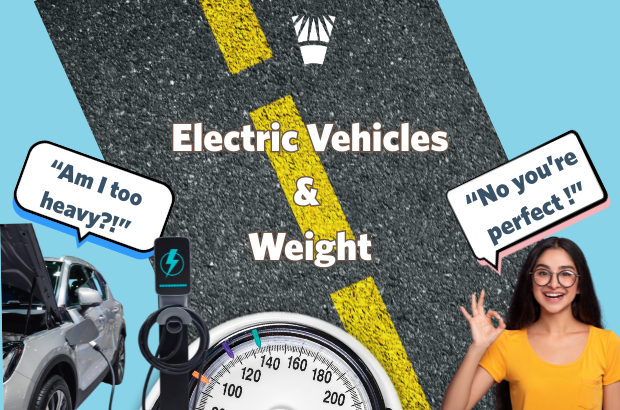
A common misconception is that electric vehicles (EVs) are significantly heavier than gasoline cars, and therefore cause more damage to our roads. While it’s true that EVs carry large battery packs that add some weight, they also drop the engine, transmission, and fuel tank — offsetting much of that difference. In reality, the difference isn’t dramatic. Most electric cars are only about 10–15% heavier than their gasoline equivalents, which translates to just a few hundred extra pounds. According to decades of pavement research, that difference is not enough to noticeably affect road wear in everyday driving. This matters because some have argued that EV drivers should pay more in taxes and fees than gas-powered vehicle drivers due to their weight. But the science simply doesn’t support that claim.
What Really Causes Road Damage? (Hint: Not Your EV Sedan)
Road damage doesn’t scale in a straight line with vehicle weight – it scales exponentially. To put it plainly, a heavy truck does vastly more harm to roads than any passenger car, EV or otherwise. Heavy trucks are the real road crushers. Experts note that big semitrucks cause “almost exclusively” all load-related pavement damage, equivalent to thousands of cars’ worth of wear. Potholes and ruts on highways are overwhelmingly a problem created by trucks, not for or electric vehicles. For example: a fully loaded 80,000-pound semi-truck can cause 2,500 times more pavement damage than a 4,000-pound car. That’s 250,000% more damage from one big rig!
While there are more passenger cars on the road, multiple studies – dating back to the 1960s and reaffirmed in recent engineering research – show that passenger vehicles in the 3,000–6,000-pound range all have roughly the same road-wear effect, regardless of whether they’re electric or gas-powered. In short, heavy freight traffic is the real driver of road damage and maintenance costs, not everyday commuters, and especially not EVs.
About That Forest and The Bigger Picture: Clean Air, Health, Affordability, and Local Jobs
Focusing too much on EV weight is a distraction from the real issues. Cars and trucks powered by fossil fuels pollute our air and water. Traditional vehicles emit tailpipe exhaust full of smog-forming chemicals and soot that worsens asthma, heart disease, and other serious health conditions.
Public health researchers often compare the health impacts of breathing vehicle exhaust to that of regularly smoking cigarettes. Depending on local pollution levels, the health burden of traffic-related pollutants (particularly diesel exhaust) can be comparable to smoking anywhere from a few cigarettes a day to a whole pack a day.
In Oregon, this is not a hypothetical problem. Nineteen of the state’s 36 counties – home to roughly 98% of Oregonians – have ambient air pollution bad enough to increase lifetime risk of health complications. These impacts are countywide, not limited to neighborhoods near highways. That means it’s reasonable to say most Oregonians have the equivalent health impacts of being smokers from vehicle pollution, simply by breathing the air floating in their communities.
The Toxic Effects of Air Pollution
EVs, on the other hand, have zero tailpipe emissions. Every mile driven on electricity is a mile not emitting carbon monoxide, nitrogen oxides, or particulate matter. According to the American Lung Association, a nationwide shift to electric cars (paired with clean energy) could prevent tens of thousands of premature deaths and save almost a trillion dollars in public health costs over the coming decades.
But the benefits of shifting away from fossil-fuel vehicles go beyond health.. Multiple studies have confirmed that exposure to air pollution from cars is linked to worse test results and more absenteeism. Unlike gasoline and diesel, which send billions of dollars out of state every year, electricity is produced locally. Powering a car with electricity also costs significantly less than fueling with gasoline, and EVs typically require less maintenance. Every mile driven on electricity keeps energy dollars circulating in Oregon’s communities instead of flowing to out-of-state oil companies.
Driving on electricity (especially as we add more renewable energy to the grid), walking, biking, and using transit massively cuts climate pollution compared to gasoline and diesel. We should be accelerating their adoption at the state level especially as we have strong federal headwinds on electrification.
Don’t Lose Sight of What Matters
Worrying that EVs will wear out our roads is like focusing on a pebble while ignoring a boulder during a rockslide. The extra weight of an electric car is a minor factor – a red herring – when it comes to road damage.
Meanwhile, the benefits of cleaner electric vehicles far outweigh any slight weight differences. EVs reduce pollution, improve public health, keep more energy dollars circulating locally, and move Oregon toward a cleaner, more equitable transportation system. Instead of penalizing EVs based on misunderstandings about road wear, Oregon should focus on:
- Aligning road funding with actual causes of pavement damage, and
- Accelerating access to cleaner transportation options for all communities
EVs aren’t breaking our roads; they are helping Oregon break free from fossil fuels, and moves us toward a cleaner, healthier, and more equitable Oregon. Rather than debating a few hundred pounds of battery, we should focus on the real weighty issue for cars: reducing the millions of pounds of carbon and toxins our vehicles spew into the air, and building an EV ecosystem that works for all Oregonians, from renters to rural residents, and people with lower incomes.