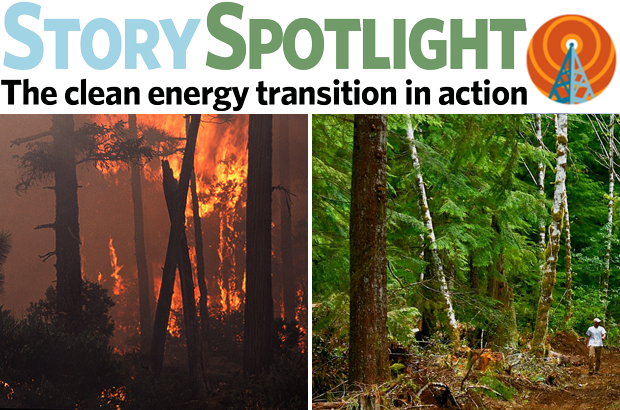
This personal account is part of an ongoing series about personal impacts from wildfires curated by Climate Solutions. With global warming contributing to more frequent and fierce wildfires around the globe, the series presents personal experiences to further collective connection, learning and action.
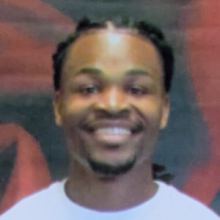
James Ellis is from Tacoma, WA. He trained to become a wildlands firefighter through a program with the Washington Department of Natural Resources and the Department of Corrections to offer employment and career paths to those currently incarcerated. He told us his story over a series of calls in between days on the job.
Kimberly Larson, Climate Solutions: What drew your interest to become a wildlands firefighter?
James Ellis: I’ve been incarcerated since I was 19 years old, and several years ago, I heard about work with the Dept. of Natural Resources—but didn’t really understand what it was about until I saw other inmates who were friends leaving for the day for work, talking about going out to projects. So, I decided to sign up. You have to take a physical exam, and there is both classroom and field testing for two weeks to learn about the equipment and hand tools and the work, and also how to identify, thin and plant trees. The pay is not always good: during the active fire-fighting season in the summer months the pay is state minimum wage, but the work in the winter is not active fire-fighting, so since it’s considered maintenance work it’s lower pay for us. And, it can be exhausting work. But I also feel like I was built for this. Now because of this job I am more aware, I want to continue after incarceration, and I want to be part of work to slow down the damage to our planet.
CS: What’s a fear you had to overcome with this job?
🔊 LISTEN: James describes the dangers of winter tree-planting
James: One of the fears I have always had is of heights, even when I was little. In 2024, it was going into the winter, and it was planting season. Planting season is where we plant trees on hillsides to help prevent fires and help the forest come back in areas that were cut or burned.
The [Dept of Natural Resources team] units were high up in elevation on the side of a mountain and up on those slopes we’re like solo free climbers, even when we’re going down the slope as it can be so steep.
It was the third day of planting, and I guess I was poking fun at mother nature, trying to be brave, so I got challenged that day.
As we planted on the steep mountain side, there were some “shelves” into the hillside and then the ground flattened out below, so the shelves were 90-700 feet high above us. And as you are going you are finding yourself slipping and sliding. The ground is not just dirt—it’s the “slash” of tree remains, rocks and more. And, It was just a few days before that another firefighter had fallen 90 feet and had to be airlifted out for injury. Knowing that happened recently intensified everything while out there.
Suddenly there was a big wall of dirt from one of those shelves that came tumbling down the hill and it almost took someone out. Then, I felt myself sliding! Looking around in a panic, I grabbed onto what I thought was a root, but it turned out it was a stick in the dirt and it snapped!
I thought: I am in fear for my life. And I froze.
My boss was saying instructions not realizing I was frozen in fear. I was thinking, “f— these trees, f— this job!” After I stopped sliding, I hiked out to the road, yet also in that moment I realized to myself, “you are being challenged right now.”
My boss approached me, and at first I thought I was going to get yelled at!
But then I hear, “Are you okay?”
“I’m not doing this, I’m from Tacoma!” I exclaimed back.
The next thing surprised me, as my boss said, “Take a minute, you don’t have to go back today.”
But I decided I wanted to go back, and I felt I could get through it. Luckily that area was flatter the rest of that day.
I have had other times since I’ve had to overcome heights, including up on ladders for this job. But after that day, it was easier and easier to handle myself better and do it again.
We all have fears. Do we let those fears conquer us or do we conquer those fears?
CS: Most folks don’t think of winter as the time to fight wildfires. Can you tell us why the cold months are so important for preventing fires?
🔊 LISTEN: Thinning and planting to prepare for active fire season
James: Yeah, the cold months are the time for thinning and planting. It’s a time that is key for forest health.
Thinning is no different than pulling out weeds in the yard, just on a bigger scale. Certain units of forest have new growth, so the crew’s job is to create space between the units of trees, 10-11 feet between them, and we do this so the trees get proper nutrition and can grow faster too. We learn the species as we never remove the cedars, but we also have to take out other trees that compete and other plants that are invasive species - the weeds - like scotch broom and blackberry that kill the native plants.
What we do is create space between the native trees, as eventually they reach a certain height and age and a lot will get harvested. Sometimes with thinning we have to walk in a few miles, or go from the bottom up. We’re up in high elevation, the air is thin and can be a factor with a lot of the guys.
With planting, we’re now giving back and putting in new trees. It’s four days a week and we get out in whatever the elements are, like rain or snow. Those seedlings are really baby trees and they can be heavy! We have up to 100 pounds on us with our plant bags—that is no joke—and can be even heavier in the rain. While walking you have to carry the plant bags, and especially if the little trees have plugs of dirt too that adds to it, and then even worse if it’s raining so the dirt plugs get wet. Sometimes when we’re going out to plant, I say to myself “Okay, it’s a leg day”—like at the gym.
We’re out there 7:30 am-3 pm. Day 1 already people are dealing with fatigue. Day 2 you’re really starting to feel it! Day 3 you do not want to move and get out of bed! And by the end of the four days, you can be mentally beat, physically sore. And it’s not just a few weeks of doing this! This is now year two of me doing planting. The time someone spends doing planting season work with DNR is usually anywhere from a year to five years.
The hillsides where we’re planting have been logged or impacted by fire. The clearing crews try to do the best they can to clear it. But it means the ground might not be well tended, as there are lots of leftover logs and slash, rocks, and uneven ground to cover. Sometimes we’re “sidehilling” which means moving sideways to plant. Once I was on a rock face cliff and had to navigate down 60 feet on my own. It was like an obstacle course.
In a day each person in a crew plants about 400-450 trees, which means up to 4,000 trees planted by a crew. Over a few days in a row I’ve planted 1800–2000 trees myself; combine that with 8-10 people in a crew, and 6-7 crews out there at once, and it adds up! And we’re making sure each little tree is upright, not leaning, and we put it in the ground by hand.
This is my second year of planting, and it’s not the easiest work, but I look for the positives. Like you start planting a bit after sunup, get done mid-day, and you can look back at the ground and acres—you’d be amazed by the difference.
Forests are the lungs of the earth. We have some of the greatest air quality here, and I feel really obligated to do the work. I'm replenishing the earth with new trees in ways we are giving back what has been taken. Also being out in the forest, it’s like being on a history lesson of how important our rainforest is and how the ecosystem works.
CS: Could you describe what it was like to go into the communities threatened by fire, how that feels?
🔊 LISTEN: Wildland firefighters interact with communities at risk
James: I still remember my first fire. It was the first fire of the year and we went over to a local fire in Copalis Crossing, in Ocean Shores. There was a fire behind the houses, and when we pulled up, a lot of folks were outside looking at us showing up in these big rigs. I remember us getting out, there were 20 men plus our crew bosses, and we’re putting our gear on, smoke goggles, grabbing tools and anything else we need.
And there was this family standing there with two little girls looking at us, maybe between the ages of 4 and 7. And I heard one of them ask their mom, “Do you think they’re going to save our home?” and I turned and said “Yes, we’re going to protect your home and make sure it doesn’t burn down.” And we did our job, put out the fire.
After we were done, we didn’t feel like inmates. That night when we were leaving, the thanks we were getting from those individuals that we helped, I thought “Man, we don’t feel like inmates, we feel like heroes!”
We’d have experiences like that in other communities we’ve gone to since. I remember going to my first project near the Canadian border [note: projects are extended work engagements, often several weeks in an area threatened by fire] and we had families, all sorts of folks out there greeting us, even giving us cookies. It was almost like a parade with folks lining the streets, giving us praises, thanking us.
Those things really did a lot not just to me but others in the crew. We realized how they saw us, helping them. It made us feel real good.
I remember a lot of those times, but that first fire, it really moved me, to be recognized that way. It felt great. We all have one thing in common: we sympathize, we care. I start to see guys in the crew impacted by this too. All those areas, folks just suffering through fire—they are families impacted.
I’ve always been an outdoor type of individual, but not in the sense of camping, hiking, fishing, hunting, or other outdoor activities. But I now love being in the outdoors even more. I have been put in a position to give back not just to society but to this earth we all live on—and do that by the work I do with so many others. I’ve had to face fears and overcome them, work hard among other brave men and women at keeping forests healthy, and I am wholeheartedly committed to creating a better environment for us all.
Coming soon: Part 2, where James describes seeing his home state in a new way, the challenges of active fire season - and ways we can all make a difference.