You know those “your dollars at work” signs sometimes seen at construction sites along the road? Well, here’s an example of pollution dollars at work!
Washington State has a law on the books requiring big polluters pay for their harmful climate pollution; those funds are then dedicated to support clean energy solutions close to home. One example is expanding our state’s electric vehicle charging infrastructure.
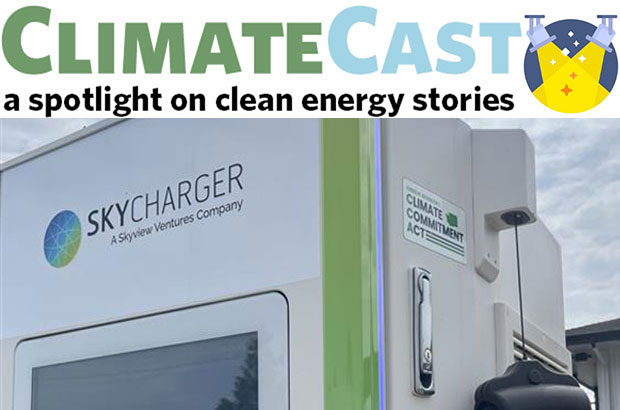
Last year in Arlington, WA, I had the chance to attend a ribbon cutting for the first EV fast charger funded by Washington’s Climate Commitment Act. Here are seven things I learned about this fast EV charger I thought were really cool (and I don’t own an EV–so even if you don’t either I think you will at least love #6 and #7):
- The EV fast charger means charging in as fast as 15 minutes, located at a key interchange serving Washington commuters and tourists. It can power up to eight vehicles at once—no waiting! There’s also a convenience store with snacks (and a nearby taco stand), so drivers can refuel themselves as well as their vehicles.
- This charger saves energy to use later. The battery backup technology means the local public utility did not need to add a dedicated substation, or a lot of additional capacity to satisfy its fast-charge electricity demand. The charger’s batteries store up energy from the grid at low-demand times, for use when needed.
- The battery back-up system meant this fast charger station was completed months ahead of schedule; an example of how to fund solutions faster!
- Truly exciting my science geek side, the battery system works better than an old string of decorative lights. The battery circuit is organized in parallel, rather than in series; increasing resilience. If one of the unit’s 8 chargers goes out, the other 7 at the site still work—unlike that old series-circuit string of lights, where one bad bulb can ruin the whole string.
- It’s the first fast charger (of many - over 100 sites plus hundreds more chargers - in the works) funded with Washington’s Climate Commitment Act revenue. That means that fees paid by major polluters are going to support public benefits, funding our transition to clean and affordable ways to get around. When we make polluters pay and put that money into solutions, we can make that transition happen way faster.
- By making it easier for folks to charge their electric vehicles—reducing the need for trips in gas-powered cars—this infrastructure helps make the air cleaner. That’s good for people close to roadsides (and by a charger vs. a fuel pump), and reduces climate pollution globally.
- It is a local win-win-win! This charger is an example of state dollars at work creating local jobs, boosting a local company, and bringing more solutions to our communities (and there are lots of examples around the country not just WA where this is true).
Why does this story matter right now?
The Washington Legislature is wrapping up its 2026 session next week. While lawmakers grapple with significant budget challenges, they must also honor their commitment and use Climate Commitment Act funds for their intended purpose: to fund clean energy solutions like expanding clean transportation infrastructure. This funding source will shrink over time, as major polluters clean up their operations—that’s a good thing! And in the meantime, the CCA provides crucial support for climate resilience, clean energy development, and environmental protection efforts across our state.
One Thing You Can Do:
If you live in Washington, contact your lawmakers now. Don’t live in WA? Please send this to someone who does and ask them to check out this action! With only a few days left, hearing from the people really helps!
Want a bonus action item? It helps if more folks hear positive solutions news. Follow us and share our post on Instagram and Facebook (we’re also on BlueSky and LinkedIn–see the footer below for links)–it helps!

CLEAN AND PROSPEROUS WA