
Clean vehicles took center stage at the Oregon State Capitol
When was the last time you rode a bus? Was it diesel? Was the engine so loud you had to raise your voice? Did the smell linger after the ride? Now picture this.
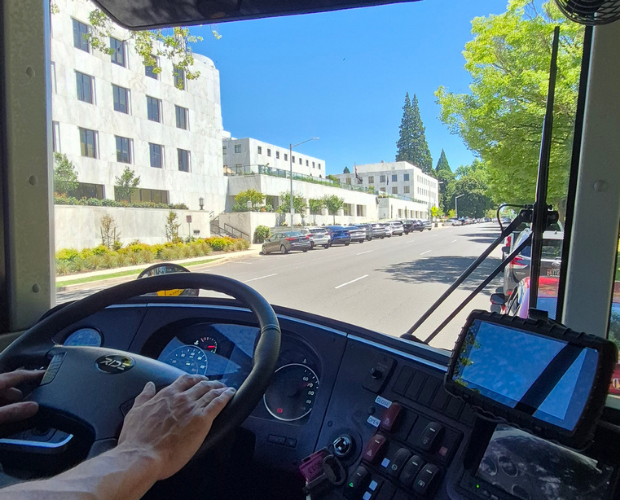
A bus pulls up silently. No rumble. No exhaust. Just a smooth, quiet ride powered by Oregon’s clean electricity, with cleaner air and healthier communities along the way.
That difference matters. Diesel exhaust is a known carcinogen linked to asthma, heart disease, and lung damage, especially for children. About 95 percent of Oregonians live with diesel pollution levels that increase lifetime cancer risk. Cleaner transportation means fewer families breathing harmful air every day.
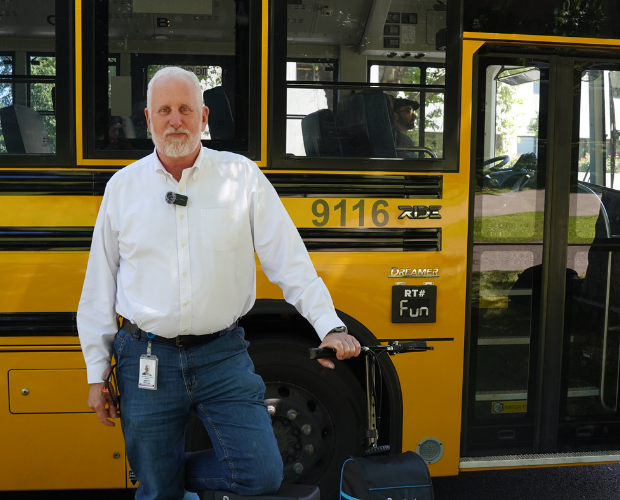
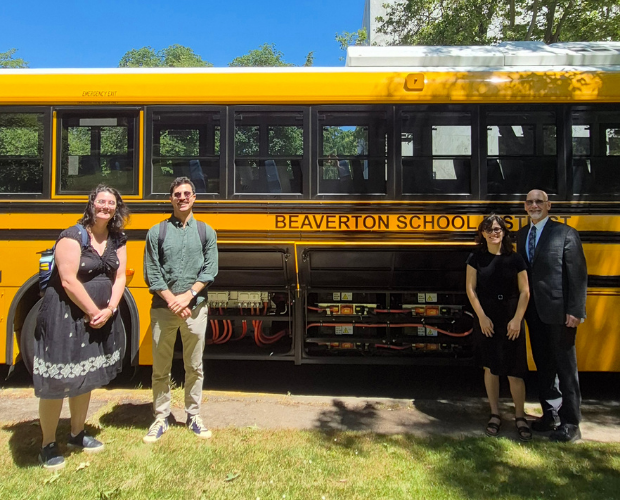
On June 16, Oregon’s clean energy future was parked outside the Capitol. Thanks to the Beaverton School District, lawmakers and staff stepped onto an electric school bus and experienced an electric school bus firsthand.
Business leaders, school district professionals, and climate advocates met with over 18 legislators and staff, rode a clean school bus, and delivered the message that clean trucks and buses are already working in Oregon, and demand is growing.
What happens next depends on whether the state keeps investing in proven clean transportation and successful programs.
Why clean trucks make sense for Oregon businesses and fleet owners
Across Oregon, school districts, local governments, transit agencies, and businesses are choosing clean trucks and buses because they offer practical benefits alongside reduced air pollution.
Diesel prices can spike quickly, and the Northwest’s continued dependence on oil exposes businesses and families to ongoing price volatility. Electric trucks and buses can cost significantly less thanks to lower fuel costs, reduced maintenance needs, and more stable electricity prices.
The challenge is that many fleet owners, especially public agencies and small businesses, must make purchasing decisions within tight annual budgets. Even when an electric vehicle will save money over its lifetime, the higher upfront cost can make it difficult to choose without financial assistance.
State incentive programs help bridge that upfront cost gap, allowing more fleet operators to make investments that lower costs over the long term while delivering cleaner air and healthier communities.
Thanks to state investments, Beaverton School District has saved more than $140,000 in fuel costs in under two years using electric buses and expects millions in lifetime savings. For businesses and public agencies, that means more certainty and more dollars to reinvest into students, services, and communities instead of fossil fuels.
Bus drivers benefit too. Electric vehicles reduce noise, vibration, and tailpipe exhaust during operation. For people who spend long hours behind the wheel, those changes improve retention and recruitment, which are ongoing challenges across the industry.
Fleets are ready to move forward. What they need is consistent, predictable support from Oregon legislators.
Why clean trucks and busses matter for Oregonians
A diesel truck idles outside a warehouse. A school bus pulls up as students line the curb. A delivery vehicle moves through a neighborhood street. Across Oregon, these moments are routine, but so is the pollution they bring to our neighborhoods.
That pollution has real consequences, particularly for children. Exposure to diesel exhaust is linked to asthma attacks, missed school days, and long-term health risks. While the pollution itself is nearly invisible, it costs us billions in healthcare costs.
Replacing those vehicles with zero-emission options means cleaner air where it matters most, at schools, in neighborhoods, and along the routes people use every day.
Not just good for the air, good for Oregon’s energy grid
In Oregon, summer no longer eases in. It arrives suddenly, and with a sharper edge. In the years since the devastating 2021 heat dome, extreme heat has become both a familiar and growing challenge, stressing our communities and the systems we rely on every day.
As those heat waves become more frequent, Oregon needs an energy grid that is more flexible and resilient to keep people cool. Even something as familiar as a school bus can help.
Electric school buses can act like batteries on wheels. With vehicle-to-grid technology, a bus can charge when electricity is cheap or plentiful and send power back to the energy grid when demand is high, like on the hottest or coldest days.
School buses are well suited for this role, because they sit idle in the summer when energy demand often peaks. With well-designed programs, schools can get paid for providing that power or grid support. In some cases, that revenue could help offset the cost of charging buses during the school year.
More broadly, smart charging helps ensure that electric vehicles use electricity when it is cheapest and cleanest, reducing strain on the grid and making better use of existing energy resources.
As Oregon continues to electrify transportation, these kinds of flexible technologies can help improve reliability while keeping costs down for everyone.
Oregon has momentum. It needs to keep going.
Oregon has already demonstrated what's possible: Businesses are saving money. School districts are improving air quality for students. New technologies are helping strengthen the electric grid. By investing in proven programs, lawmakers can help communities breathe cleaner air, lower transportation costs, and build a more resilient energy system for years to come.
Sources:
- Oregon Environmental Council, Diesel and Air Quality.
- OregonLive, Oregon School Districts Get Creative to Boost Energy Resilience, Save Money, published June 27, 2026.
- World Resources Institute Electric School Bus Initiative, Diesel Exhaust Pollution Can Impact Academic Performance. Electric School Buses Provide an Alternative, published August 29, 2025.
- Canary Media, In Massachusetts, parked EVs will start feeding the grid this summer, published June 3, 2026.