What are Line Extension Allowances and Why Should You Care?
Some good news: Cascade Natural Gas has just agreed to phase out line extension allowances for Oregon residential customers. You might be asking what line extension allowances are. And why should I care? The short version is, we removed one more unfair charge from your bill.
Our gas bills are generally full of all kinds of expenses and charges, most of which are not related to the price of the gas itself.
Utility spending on the gas distribution system (the pipes that transport gas around our communities) tripled between 2011 and 2019 compared to spending over previous decades. These investments and other costs of maintaining and expanding the gas system make up the vague and growing “delivery charge” on gas bills. While the roller coaster of international fossil fuel markets drives the costs of the “supply charges” on our bills.
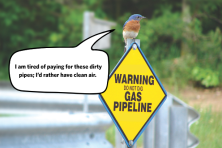
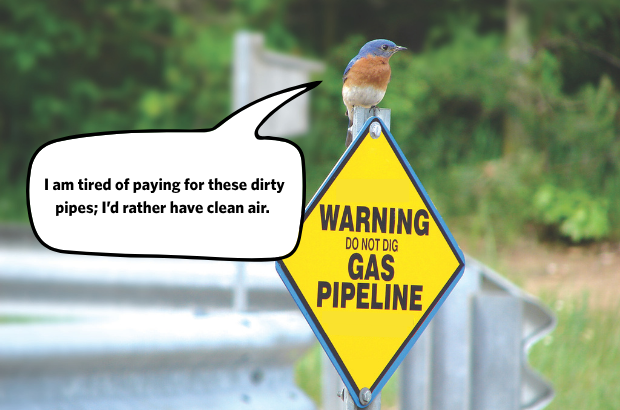
Line extension allowances are one of the costs that make up those “delivery charges.” To increase their profits and drive growth in fossil fuel use, gas companies use line extension allowances to attract new customers to the gas system.
These charges are outdated. They are a relic of a time when the gas system was expanding rapidly, and when customers benefited from that expansion by spreading costs across more customers. This is not our reality today. Gas system growth is slowing, and technologies like heat pumps, which deliver highly efficient heating AND cooling, are pushing more consumers to opt out of gas heating and out of gas service overall. This means that the gas system is likely to shrink over time as more customers go electric.
These charges are unfair. Paying for new customers to join the system no longer benefits existing gas customers. New gas infrastructure runs the risk of being “stranded” later on with not enough customers remaining on the gas system to cover the costs of all the projects built today. These costs are likely to be paid by the most vulnerable folks on the system, those who can least afford to upgrade their homes to heat pumps and other efficient electric technologies.
Gas companies use line extension allowances to increase their customer base and their profits at the expense of existing customers. Gas utilities can charge customers directly for building and maintaining pipelines, which can cost up to $6 million per mile. Customers pay for the methane pipelines, yet the utility receives an unnecessarily high rate of return on that pipeline “infrastructure investment” - even though customers paid for that investment.
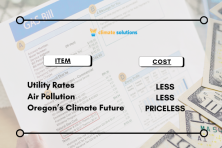
In Oregon, phasing out these charges could save gas customers $33.69 million per year. The good news is we have made progress in ending these outdated and unfair charges! Both Avista and NW Natural are required to phase out allowances in 2027 (Jan 1 and Nov 1, respectively). Cascade’s recent agreement to phase out their line extension allowances by 2028 marks the end of this outdated policy for Oregon households, and the start of more savings to come.
NW Natural wants to put these charges back on customer bills and is currently suing to overturn that decision, but the state and advocates are fighting back.
In addition to agreeing to phase out their line extension allowances, Cascade agreed to pilot a new program to help their customers access heat pumps, which provide the most efficient heating and cooling on the market. The utility will launch a pilot to provide customers with $1500 off the cost of a new heat pump, enabling more folks to install these devices to stay cool in the summer and safe from wildfire smoke. These customers will also be able to save on their winter gas bills by using the heat pumps for heating. Modern heat pumps are three times more efficient than gas furnaces.