Power Past Coal
Governor Jay Inslee is committed to a clean energy future. We need everyone around the country thanking him for pressing forward on climate ac
Governor Jay Inslee is committed to a clean energy future. We need everyone around the country thanking him for pressing forward on climate ac
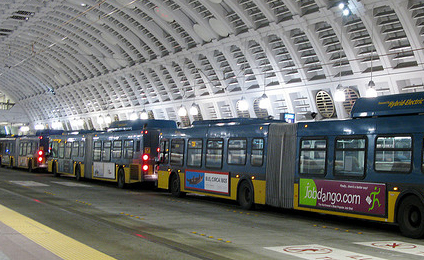
On Earth Day—April 22—King County, WA voters should resoundingly pass Proposition 1 to keep Metro bus service at current levels, and send a strong message of support for our region’s environment, economy, and citizens.
At the University of Washington, competing teams of students sought novel solutions to seemingly intractable environmental problems, from reducing packaging waste, to finding new paths for recycling, to creating new renewable energy systems.
We are seeing the first commercial-scale cellulosic ethanol plants commissioned in the United States and green diesel is emerging as a key biofuel, potentially a game-changer for sustainable advanced fuels.
Efficiency programs save BPA customers $1 billion in per decade. Do the utility's short-term needs really take precedence over our energy and climate future?
The short 2014 Washington legislative session concluded on Thursday night, and centered on a single question: How will we prepare a better future for our children?
The work of choosing and executing strategies that add up to large-scale carbon reduction must begin in earnest. In the Northwest and around the United States, we are seeing early signs that elected officials are responding to this call and starting down the path of hard work.
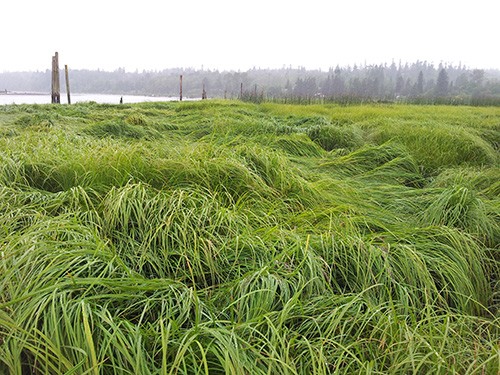
The Puget Sound estuary has the potential to store 8.9 million tons of CO2, the equivalent of 1.76 million cars. That’s almost as many cars as are registered in Snohomish and King Counties – the most densely populated part of Washington State.