Oregon Governor Signs Microgrid Legislation, Advancing Oregon’s Path to Energy Resilience
Last week, Governor Kotek signed two bills into law, HB 2065 and HB 2066, which will create a process for developing community-owned microgrids. Microgrids are a key part of Oregon’s decarbonization and energy resiliency goals. But their development has been hampered by technical and regulatory challenges. What are microgrids, why has building them been challenging, and how does this legislation help?
Microgrids are Unique Energy Systems
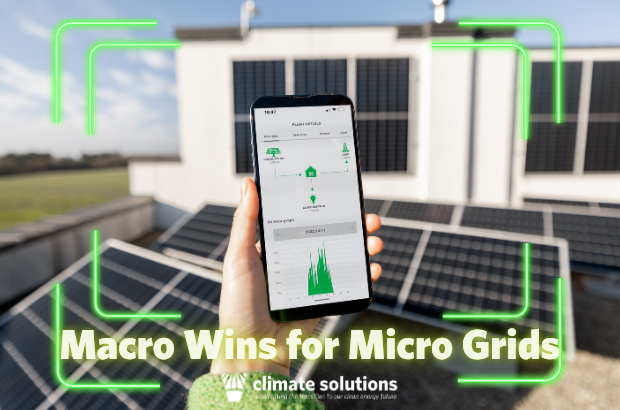
Microgrids are local, self-contained energy systems comprised of generating resources and battery storage. They can use many types of power, but often utilize solar panels or other local renewable resources like geothermal and micro-hydropower. Microgrids are designed to operate independently of the power grid (known as ‘islanding’), or in coordination with it. When islanding, microgrids can keep homes, hospitals, and other critical infrastructure powered. This is especially important during grid disturbances, such as wildfires, when power is shut off for public safety. Community-owned microgrids also bring economic benefits, along with resilience. Many Oregonians, particularly those living in rural areas prone to wildfires, will benefit from microgrids.
Community Microgrids Face Hurdles in Oregon
Developers of community-owned microgrids have encountered multiple challenges. They must request an interconnection to the local electric grid from the local utility. However, there are no rules yet regarding how those requests are handled. Additionally, guidelines are needed for how microgrids are operated in conjunction with utility transmission systems. And importantly, if microgrids send power back to the grid, a set cost must be established for compensating them.
HB 2065 and HB 2066 Remove Hurdles
The legislation, championed by the Making Energy Work for Rural Oregon coalition, facilitated by Sustainable Northwest and rural communities, will address these challenges. It directs the Public Utility Commission to create rules and guidelines for microgrid interconnection, operation, and compensation. Once written, we expect these clear rules will help expedite construction of more microgrids in rural areas. While the legislation takes effect in the near term, it will take a while for the PUC to develop this framework, and multiple stakeholders will be involved. We will keep you updated as we continue making progress on ensuring every community in Oregon is energy resilient.