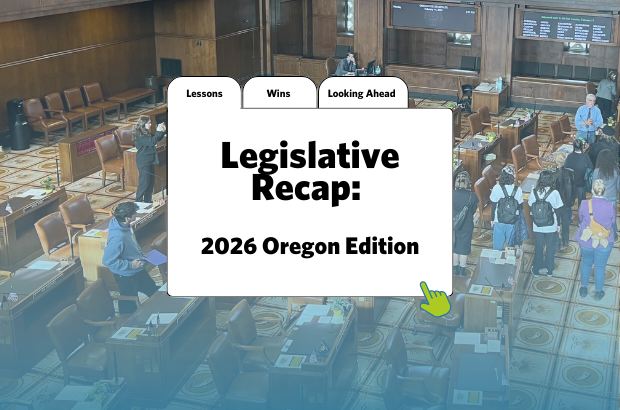
The 2026 Oregon legislative session unfolded against a stark national backdrop. As the Trump administration and its allies moved aggressively to roll back clean air protections and slash environmental justice programs, Oregon’s commitment to climate leadership was put to the test. At the same time, the warning signs of a warming climate were impossible to ignore: this winter brought the lowest snowpack in recorded history, a grim preview of a potentially severe wildfire season and a direct threat to the farmers, fishers, and rural communities who power our state’s economy.
Lawmakers faced extraordinary challenges. They navigated a budget crisis driven by federal tax changes while working to protect immigrant communities and safeguard healthcare access. We recognize and appreciate this vital work to defend Oregon’s core values. Unfortunately, that commitment did not extend to climate action. Despite the urgency of the moment, the legislature largely failed to protect and advance Oregon’s climate progress.
Missed opportunities for practical climate solutions in Oregon
This session offered real opportunities to advance policies that would have reduced costs for families while supporting Oregon’s growing clean energy economy.
Instead, lawmakers failed to pass several broadly supported proposals that would have lowered costs, created local jobs, and strengthened community resilience, including legislation to:
- Expand community-based energy solutions through virtual power plants to reduce costs and strengthen grid resilience (SB 1582).
- Help households upgrade homes to be healthier and more energy efficient, lowering bills while supporting local contractors (SB 1588).
- Improve accountability and climate alignment in transportation investments (SB 1542 and SB 1543).
- Holding major polluters accountable by establishing a Climate Resilience Superfund to collect payments from fossil fuel companies responsible for the growing costs of wildfires, drought, and other climate disasters (SB 1541).
These proposals offered pragmatic, job-creating, money-saving tools to strengthen Oregon’s energy security while cutting pollution. At a time when Oregonians are feeling squeezed by rising utility bills and economic uncertainty, we are disappointed they failed to move forward.
Cuts to popular climate and community transportation investments
Transportation budget cuts compounded the problem. Rather than protecting popular and essential transportation programs, lawmakers reduced funding for initiatives that help children get to school safely and support healthier, more sustainable ways to get around. These reductions also slowed progress on expanding EV charging for renters and rural communities increasing access to more transportation options.
Balancing budgets at the expense of community, climate, and health is shortsighted. Looking ahead to 2027, we hope to see lawmakers restore and strengthen investments in programs that improve safety, support affordability, and help meet our climate goals.
A few wins for clean energy and local jobs
Despite these setbacks, a few key measures moved forward to protect Oregon’s progress.
- Accelerating wind and solar (HB 4031): Lawmakers passed this to help renewable energy projects move forward before federal tax credits expire. This ensures Oregon can capture critical federal dollars while expanding access to clean, affordable power.
- Cutting waste in manufacturing (HB 4086): This creates a strategy for circular industrial projects, where one company’s waste becomes another’s raw material. These projects can reduce pollution while strengthening Oregon’s local manufacturing sector.
- Defending the climate agencies that protect us: Lawmakers also worked to shield Oregon’s energy and environmental agencies from severe budget cuts. These agencies are the front line of defense against federal rollbacks and are essential for protecting clean air and water.
Preserving these agencies’ capacity is critical as Oregon faces growing climate harms, including worsening wildfires. Unfortunately, Oregon’s budget situation is projected to get much worse. With a massive funding gap looming for 2027, the state will need durable solutions like the Climate Resilience Superfund and Upgrade and Save. These are practical, necessary tools that allow us to protect our communities even when traditional state funding is tight.
Looking forward to climate progress in 2027
While many of our legislative priorities were sidelined this session, climate progress in Oregon isn’t standing still. Since we can’t count on the federal government to protect us from climate harms, the state is moving forward with other vital tools to shape the next phase of Oregon’s energy transition. State strategies and recent executive actions will guide agency work to prepare for action in 2027. Key priorities include:
- Expanding and modernizing the grid to bring more clean electricity to Oregon homes.
- Building a climate-forward transportation system that works for all Oregonians
- Expanding financing tools that ensure households and small businesses can access clean technologies without facing prohibitive upfront costs
- Improving siting and permitting so projects can move forward efficiently while protecting communities and ecosystems
- Expanding local and distributed energy resources such as community energy systems and storage
By preparing now for 2027, Oregon leaders can show a commitment to creating jobs, lowering energy bills, and protecting public health. We must defend the progress Oregon has made and deliver practical solutions that strengthen community resilience. The 2026 session fell short of what this moment required, but with climate impacts accelerating and federal leadership faltering, the work to build a more affordable and resilient energy future for Oregonians continues.