Clean fuels offer a cleaner future and economic growth
New developments in advanced biofuels—and a proposed clean fuels standard—hold great promise for helping cut back our dependence on dirty oil.


In this week's ClimateCast: A Republican mayor pushes for a net-zero energy code, insurers place their bets on climate risk, rooftop solar makes strides in Bangladesh, and more news of the emerging clean energy economy.

A former Texas oilman and a public health advocate stand up to Big Oil, and fight for clean air and homegrown jobs in the Northwest.

In this week’s ClimateCast: Washington Gov. Jay Inslee announces climate plan, New York utilities rethink their business model, pteropods succumbing to sour sea water, and more.

In this week’s ClimateCast: British Airways inks contract to buy fuel made from garbage; Keystone pipeline decision delayed until after November elections; solar prices plummeting to parity with market prices; and more.
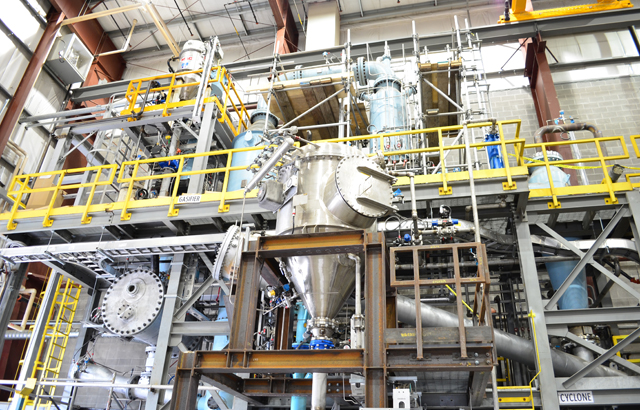
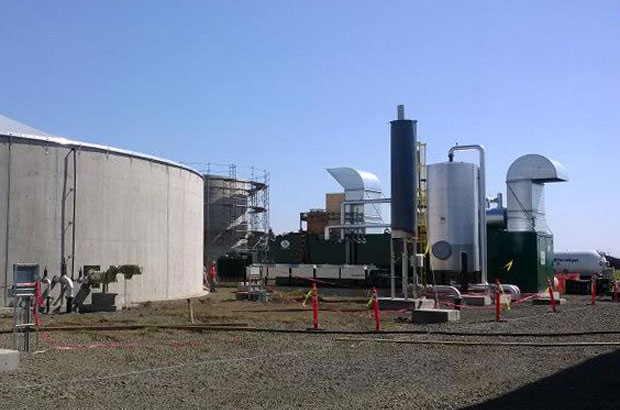
A new generation of "biorefinery" projects is turning garbage into fuel, and diverting municipal waste from landfills.

We are seeing the first commercial-scale cellulosic ethanol plants commissioned in the United States and green diesel is emerging as a key biofuel, potentially a game-changer for sustainable advanced fuels.

We can learn from termites--producing biofuels from innovative biorefineries that can break down crop residues and woody materials, doing so economically and in a way that doesn’t harm the environment.

Erik Lindbergh’s organization Powering Imagination is now working with innovators in electric flight, biofuels, and noise reduction to influence the future direction of aviation.
In the short time since we formally launched our SAF program, we have had the opportunity to drive good policy and increase understanding of the opportunities, needs and specific actions required to support sustainable fuels in our region and around the world.
Join our email lists to learn about what we do and to get involved.
Sign up for text alerts to help win transformative climate policy in the Northwest!
New developments in advanced biofuels—and a proposed clean fuels standard—hold great promise for helping cut back our dependence on dirty oil.
Oregon's Clean Fuels Program, established by the Oregon State Legislature in 2009, is a performance-based standard that requires oil companies to reduce the carbon content of their fuel mix by 10% over ten years.
When an organization claiming to represent small business conducts an analysis, you'd hope that basic business accounting wouldn't be a problem. But when the "analysis" is actually an oil industry attack on climate policies...
Rockefeller family foundation to divest from the very fuels that built their fortune, U.S. Navy orders 100 million gallons of biofuels, novices build a wind generator from scratch, and more stories of the week in clean energy.
Banks predict transformation for electric utilities, blunt warnings ahead in the IPCC report, power companies and regulators look for new pricing schemes, and more news of the week in clean energy solutions.
The carbon-storage skills of ants and the biofuel potential of tobacco; energy efficiency financing surges, and Beijing bans coal. All that and more in this week's ClimateCast.
Food waste in landfills creates methane as it decomposes – a potent greenhouse gas. An innovative program in Junction City, OR transforms this waste into clean, renewable energy.
Fifteen roadmaps to decarbonize the biggest carbon-emitting economies, Indian solar entrepreneurs electrifying rural villages, oil companies gambling trillions in exploration dollars, and much more.
Oregon’s Clean Fuels Program is a great step forward. But oil companies are threatening the program’s very existence before it has a real chance to make a difference for Oregon businesses, consumers, and our communities.
As we near July 4th, it’s a perfect time to declare our independence from Big Oil!