



Bipartisan House Votes to Make Oregon Coal Free
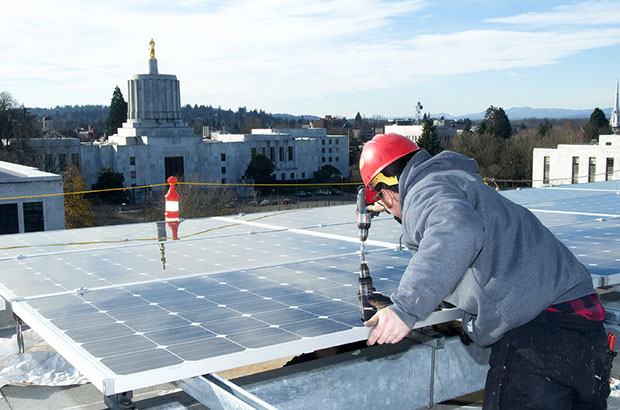
Oregon is one big step closer to a coal free, clean energy future.
Solar prices dropping, global temperatures rising, wind farms producing more energy for every megawatt of capacity, and more news of the week in clean energy solutions.
The largest, most toxic, and densest algae bloom ever recorded is hurting shellfish populations and local economies in unusually warm waters off the Pacific coast. Is this a harbinger of climate changes to come?
Second-largest U.S. coal company files for bankruptcy, small businesses can finance solar arrays on their property tax bills, UPS aims for 12 percent renewable fuel by 2017, and more news of the week in clean energy solutions.
State, regional, and city government leaders are not fiddling while the planet burns. Instead, they are demonstrating the pathways to a low-carbon future.
Climate policy question 1 is simple: Do we have the will to do what is necessary? Not what’s easy. Not what Big Oil will allow. What’s necessary.
Thank Governor Inslee for responding to the threat of global warming—and ask him to continue working for just and equitable climate action that works for all Washington residents.
This week Governor Inslee announced bold action to address global warming, directing his administration to use its full authority under the Clean Air Act to enforce existing limits on carbon pollution.
Why are we allowing Shell to drill for oil in the Arctic? Even if tapping a new source of oil wouldn't guarantee a future of climate chaos—and it would—there's no reason to believe Shell has what it takes to leave behind its record of disaster after disaster.
Unfavorable conditions on the slope! Skiing and snow-based recreation are major economic engines, but are also an early-warning system for climate impacts on business.
We need to wage and win a clean energy revolution—a bold and just transition from fossil fuels to clean energy. Fossil fuel industries are working against us, but together we can stand up and get the job done.
Join our email list to learn about what we do and how to get involved.
Oregon is one big step closer to a coal free, clean energy future.
When it comes to global warming, we can't afford inaction. But that's what some Washington lawmakers are proposing, with a bill that would halt efforts to reduce greenhouse gas emissions in our state.
Events in 2015 created so much momentum for the fight to stop global warming, and the first weeks of 2016 proved no different. Here's what Climate Solutions and our allies are doing to maintain course and speed towards a clean energy future.
The #LocalImpact16 Conference will empower the next generation of sustainability and social responsibility leaders by providing access to networking events, engaging workshops, and discussions lead by professionals, activists and community leaders who are already creating change. We are looking for innovative and inspired people to join the movement and together we will maximize the positive impact we have on the prosperity of people AND the planet.
Oregon’s Legislature may be headed into a short session next week, but the agenda for climate and clean energy is nothing short of completely impressive. Only two months after the historic Paris Agreement on climate change, Oregon is poised to be the first state out of the gate to heed the call to action.
China overtakes Germany as country with most solar power, energy bill heads for Senate floor, bonds backed by rooftop solar earn an investment-grade rating, and more news of the week in clean energy solutions.
On January 26, join the World Affairs Council for an event to review the Paris Agreement, the implementation process, and the agreement’s role in combating climate change.
The third annual Arctic Encounter Symposium (AES) in Seattle, Washington will convene policymakers, industry leaders, and leading experts to confront the leading issues in Arctic policy, innovation, and development.
We need your help to stop the largest proposed crude oil-by-rail terminal in North America! Tesoro wants to ship 360,000 barrels of volatile crude oil per day by train through our region and down the Columbia River.
Less than a month after the historic Paris agreement on climate change, Oregon utilities, climate advocates and environmental groups are heeding—and leading—the international community’s call for a clean energy transition.